African languages
Translation and speech synthesis, public-service assistants, corpora and open data.
Deliver weather alerts and agricultural advice in the language people actually speak.
P.A.S Challenge 2026
The SALTIS hackathon, organised by IAS. Five weeks to ship an online POC, tested by real users. Finale on 10 December in Dakar.
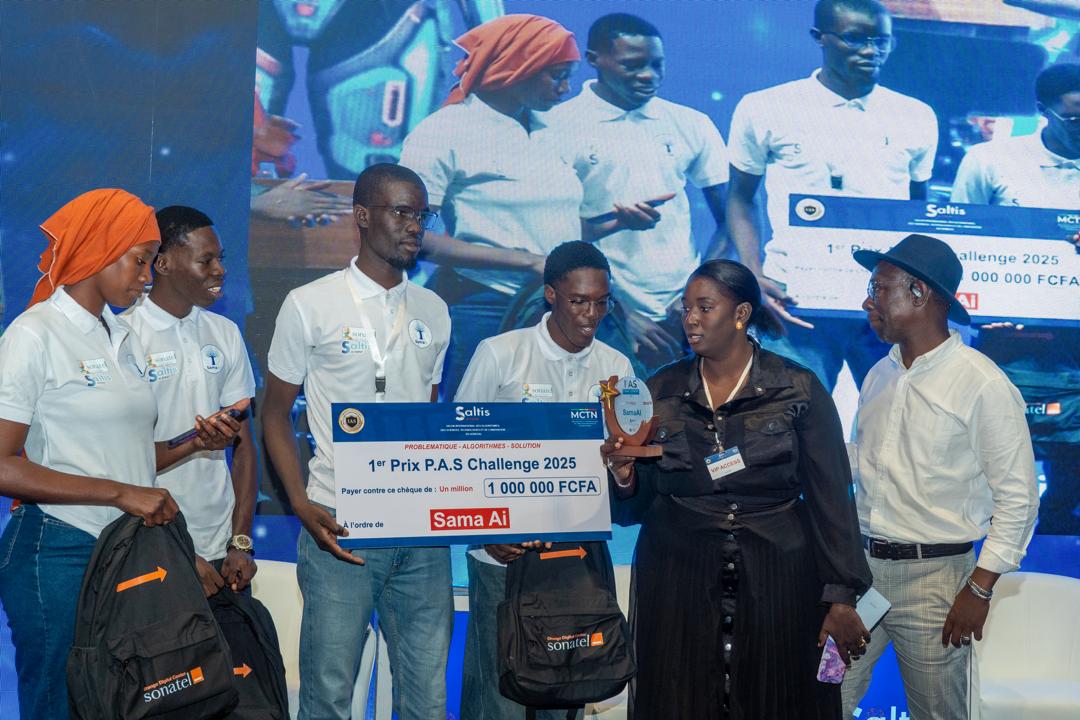
102 participants in 2025
Submission from 1 to 14 October, until 23:59.
The challenge
The Institute of Algorithms of Senegal organises the P.A.S Challenge 2026 as part of SALTIS.
Youth teams work on a concrete problem, from a company, a cooperative, a hospital or citizens. They have five weeks to ship an online POC, tested by real users, then defend it in Dakar.
You take part as a team, five members at most. Each member is between 15 and 30. They are a student, in a university, higher education or vocational training, or a young founder, creating a venture still at the idea or start-up stage.
Each team picks one theme: African languages, agriculture, transport or health. Climate runs through all four and counts in the jury score.
Applications are open from 1 to 14 October 2026, until midnight. PAS runs from 18 October to 22 November. The jury review is on 25 November, mentoring runs from 27 November to 7 December, and the finale is on 10 December during SALTIS.
P.
It starts with a concrete problem. The team chooses it, understands it, and the jury validates it.
A.
The team designs the method: the data, the model, the rules, the user journey.
S.
They ship a deployed POC, online, tested by real users, and defend it in Dakar.
How it runs
Five weeks to build. The calendar fits in five dates.
01
1 to 14 October, 23:59
Form the team, choose the problem and send the file. Submission closes on 14 October at 23:59.
02
18 October to 22 November
For five weeks, teams build and deploy their solution.
03
25 November
The jury sees how far the solution has come.
04
27 November to 7 December
Mentors work with the teams through to the finale.
05
10 December, Dakar
Finale and awards during the SALTIS BUILD day. The solution has to run live.
What is expected
The jury wants to see the solution work, with real data and real users.
2026 themes
Climate runs through all four themes and counts in the jury score.
Translation and speech synthesis, public-service assistants, corpora and open data.
Deliver weather alerts and agricultural advice in the language people actually speak.
Crop-disease detection, yield forecasting, water and input management.
Save water, cut post-harvest losses, adapt crops.
Route optimisation, multilingual traveller information, safety and predictive maintenance.
Cut emissions and measure the footprint of travel.
Decision support for diagnosis, access to care, epidemiological monitoring, tools for clinicians and patients.
Anticipate climate-related health risks and better protect vulnerable communities.
Starting ideas
A team can start from an idea on the list, adapt it, or submit its own in the file. The jury validates it when it is useful, the data is reachable, it fits in five weeks, and the climate effect is clear.
Voice alerts in a local language
Turn a weather or farming bulletin into a voice message in Wolof, Pulaar or Serer.
Admin steps by voice
A bot that understands a question in Wolof and answers: documents, place, cost, delay.
An open language corpus
Let people record, transcribe and check sentences, then publish the corpus.
Oral heritage
Record a story, transcribe it, translate it, and make it listenable.
Farm credit scoring
Help an agent assess a small producer from the plot, the sales and the local climate. The score is explained. It does not decide for the agent.
Crop diagnosis from a photo
Recognise a disease on a leaf, even offline, and suggest treatment in the producer's language.
Irrigation by SMS
Send each day how much water the crop needs, from the weather and the growth stage.
Make informal transport visible
A map of cars rapides, Ndiaga Ndiaye and clandos, with a waiting time also available on WhatsApp or USSD.
Roads cut by floods
A bot to report a flooded road, check it, and suggest a detour.
Greener delivery riding
Track a small moto fleet: fuel use, maintenance, fuel saved.
Malaria and dengue alert
Cross weather and reported cases so a district can prepare before the peak.
Guidance for community health workers
A voice assistant that follows a protocol and says when to refer someone to a clinic. It does not make a diagnosis.
Find a medicine in stock
The nearest on-duty pharmacy that has the product, on the web or WhatsApp.
A problem of your own fits on one page: the problem, who lives it, what the POC will do, the data, and the climate angle.
Not only code
Creative profiles belong on the team.
Simple screens, readable on a small phone, clear for users who read little.
Visuals, voice and interfaces generated, then reworked. The team's eye matters more than the tool.
One minute of a real user with the solution persuades more than a slide deck.
What the team leaves with
Every team that takes part moves a POC forward, in front of a jury, in the middle of SALTIS.
5 weeks
to build and deploy the POC
1 online POC
tested by real users, ready to show after the finale
1 finale
in front of the SALTIS audience, on 10 December
4 fields
languages, agriculture, transport and health, with climate in the score
After the finale
Teams that stand out may reach opportunities carried by IAS and its partners. They depend on the partners of that edition.
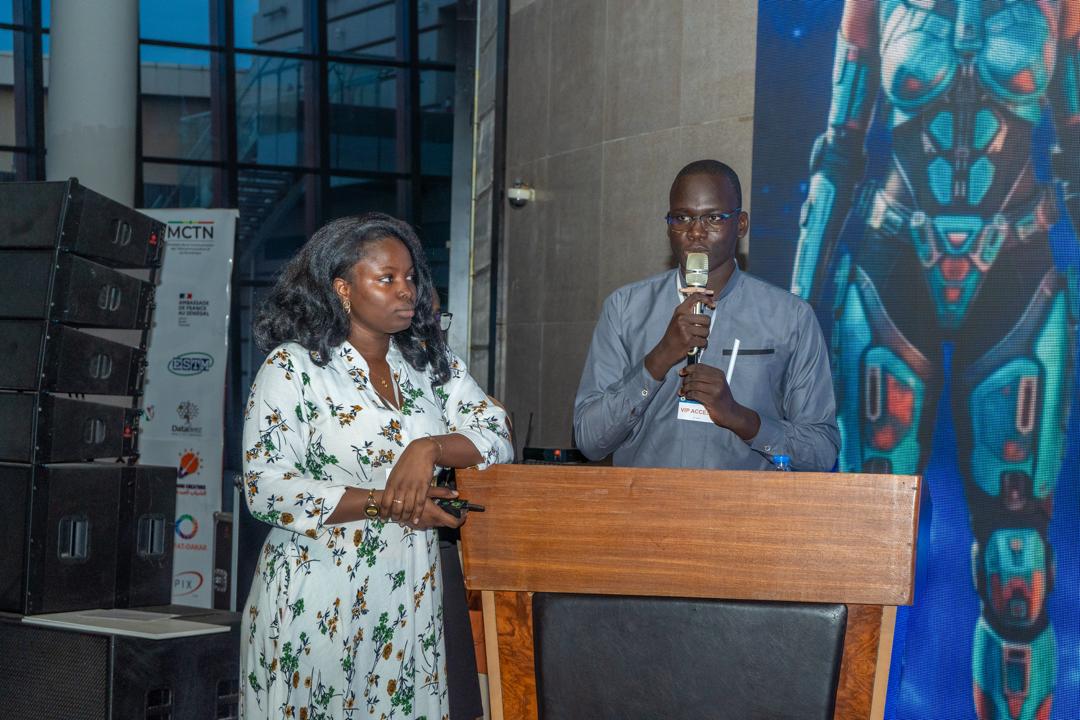
Previous edition
Partnership
Three packages, plus theme patronage.
On request
Logo on materials, mention in the final report, invitation to the finale.
Request the packOn request
All Associate benefits, logo on an award, access to teams, a seat on the jury.
Request the packLead package
On request
All Official benefits, a speaking slot on stage, name on the main prize.
Request the packBespoke. You set the problem and your name carries the theme.
Applications are open from 1 to 14 October, until midnight. Then you still have to choose the problem.